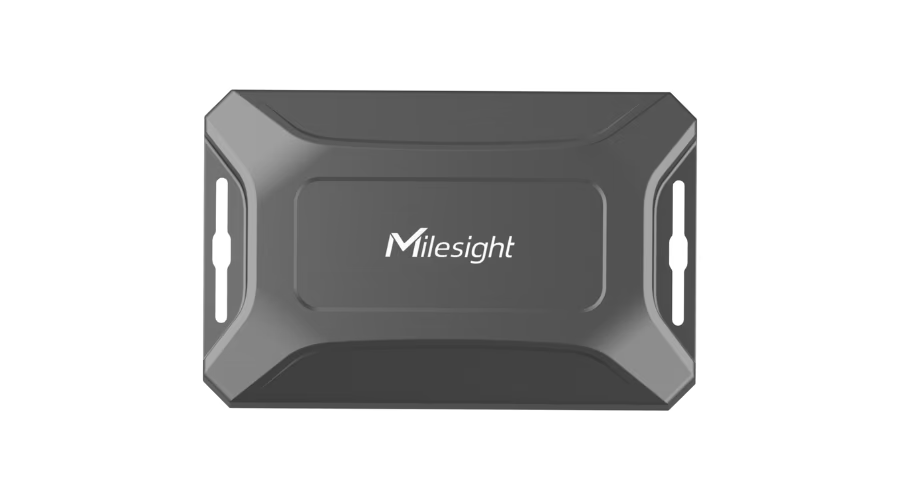
Milesight AT101 - Outdoor Asset Tracker
Monitor vehicle and asset movement while setting up virtual boundaries with geofencing technology using the outstanding…
AUD $173.80 inc. GST

Battery-powered Milesight sensors for asset tracking and leak detection across the AU915 LoRaWAN (Long Range Wide Area Network) band — GNSS (Global Navigation Satellite System) trackers, MEMS (Micro-Electro-Mechanical System) tilt sensors, conductive water probes, and magnetic switches.
[Request Trade Pricing →] [Download Datasheets →]
IMAGE ALT (hero banner): Asset Tracking & Leak Detection — Qantec Automation Australia
Qantec Automation distributes Milesight smart building hardware across Australia as a sister company within the Oberix Group. This category consolidates asset tracking and leak detection sensors built on AU915 LoRaWAN, spanning GNSS asset trackers, three-axis tilt sensors, conductive water leak detection probes, sensing ropes, printed membranes, and magnetic contact switches. Every model listed here ships from local Australian stock with trade pricing and engineer-level technical support.
A numbered list for WooCommerce tile rendering. This sub-category holds products directly; tiles map one-to-one with the verified Milesight catalogue.
IMAGE ALT examples — Milesight AT101 outdoor asset tracker tile — Asset Tracking; Milesight WS303 mini leak detection sensor tile — Leak Detection
Yes — Qantec holds AU915-ready asset tracking and leak detection sensors in local Australian stock, configured for the AU915 channel plan out of the box. Volume orders ship without import lead times, on trade pricing, with datasheet-verified configuration and engineer support, so each asset tracking device joins your network on day one.
[Get a Trade Quote →]
On this page: Overview
· AT101 Asset Tracker · Tilt & Angle Sensors · Water Leak Sensors · Magnetic Contact Switches · EM300-DI Pulse Counter · Australian Compliance · Why Specify Qantec · FAQs
Leak detection is the continuous monitoring of conductive-liquid presence at a surface, raising an alarm the instant water bridges a probe circuit. Asset tracking pairs a GNSS receiver with Wi-Fi scanning to fix position to within a few metres, so one network handles both leak detection alarms and asset tracking updates. Milesight contact sensors register water from as little as 0.5 mm depth and report over the AU915 LoRaWAN band, while an asset tracking system logs location, movement, and tilt on the same Class A link with AES-128 payload encryption. A single gateway then backhauls intrusion, tilt, leak, and location data into one platform. These devices share the broader IoT sensors and devices range [Link to: IoT Sensors & Devices Main Category Page] and slot into existing networks without proprietary controllers, which keeps asset tracking and leak detection on one toolset rather than two.
The Milesight AT101 Outdoor Asset Tracker [Link to: Milesight AT101 Outdoor Asset Tracker Product Page] is a battery-powered asset tracking unit that fixes position using four satellite constellations — GPS, GLONASS, Galileo, and BeiDou — and falls back to Wi-Fi access-point MAC scanning where satellite signal is weak. A built-in three-axis accelerometer flags movement and any tilt beyond 20 degrees, and an NTC sensor reports ambient temperature for cold-chain or plant-room duty. The IP67 and IK09-rated enclosure withstands dust, water jets, and physical impact, while replaceable batteries deliver up to 15 years of service at two reports per day, or roughly eight years at ten reports per day, per the Milesight AT101 datasheet. Geofencing, a tamper button, and protected 1,000-record storage make this asset tracking device suitable for construction plant, fleet bins, and remote asset monitoring. For outdoor asset tracking, that mix of GNSS, Wi-Fi fallback, and long battery life keeps high-value plant visible without mains power or a SIM.
A tilt sensor measures angular displacement on three axes and triggers an alarm when an object leans past a set threshold. The Milesight EM320-TILT [Link to: Milesight EM320-TILT Wireless Tilt Sensor Product Page] uses a MEMS accelerometer to deliver a -90 to +90 degree measurement range, 0.01 degree resolution, and +/-1 degree accuracy, with up to 36 user-defined trigger alarms across the X, Y, and Z axes. This wireless tilt sensor supports a custom initial position, so installers zero the device against any mounting surface rather than a fixed datum. It is the current model and replaces the legacy EM310-TILT, an earlier three-axis tilt angle sensor with the same IP67 housing and NFC (Near Field Communication) configuration but without the expanded threshold logic. As a smart tilt sensor for pole-lean, manhole-cover, and structural-movement duty, the EM320-TILT reaches up to 15 km line-of-sight in open terrain.
The right sensor to detect water leaks closes a circuit the moment liquid bridges two conductive contacts, then reports the event over the AU915 LoRaWAN band. Four Milesight detection topologies cover the range, with trigger depths from 0.5 mm at the WS303 spot probe, 1.5 mm on the EM300-ZLD sensing rope, and 5 mm at the EM300-SLD remote probe, so the sensor format matches the risk geometry — a single drip point, a long cable run, or a broad floor area. The table below compares the range; all four detect water and weak acids or bases, but none are rated for fuels, oils, or strong corrosives.
| Model | Detection method | Coverage | Trigger | Temp / RH | Battery (typical) |
|---|---|---|---|---|---|
| WS303 | Two gold-plated pins | Single spot | Water >= 0.5 mm | No | 590 mAh coin cell, up to 5 yrs |
| EM300-SLD | Probe, two metal pins (1.5 m cable) | Single spot, remote probe | Water >= 5 mm | Yes (+/-0.3C / +/-3% RH) | 4000 mAh (5 yrs) or 8000 mAh (10 yrs) |
| EM300-ZLD | Conductive sensing rope | 3 m linear zone | Water >= 1.5 mm | Yes | 4000 mAh, multi-year |
| EM300-MLD | Printed reusable membrane | 400 x 400 mm area | Surface contact | Yes | 4000 mAh, multi-year |
The WS303 mini leak sensor [Link to: Milesight WS303 Mini Leak Detection Sensor Product Page] adds a built-in buzzer and capacitor-backed power-failure alarm, making it a discreet wireless leak detection sensor for server cabinets and archives. The probe-based EM300-SLD spot leak sensor [Link to: Milesight EM300-SLD Spot Leakage Detection Sensor Product Page] suits pipe joints and pump bases where the body must sit clear of the wet zone, and the EM300-ZLD rope extends the same water leak detection coverage along a full cable run. All four support Milesight D2D (Device-to-Device), so a leak event can trigger IoT controllers for automated valve actuation [Link to: IoT Controller Sub-Category Page] directly, without waiting on a server round-trip. For depth and distance measurement rather than leak detection, the liquid level and distance sensors [Link to: Liquid Level & Air Quality Sensors Sub-Category Page] cover that requirement, while each leak detection sensor here stays focused on presence at a surface — so a water leak detection layout maps cleanly onto the zones where water can actually pool.
A magnetic contact switch reports the open or closed state of a door, window, or cabinet by sensing reed-to-magnet separation — the WS301 magnetic contact switch [Link to: Milesight WS301 Magnetic Contact Switch Product Page], a wire-free indoor door sensor, and the EM300-MCS, an IP67 outdoor unit — as compared below.
| Model | Environment / Rating | Temp & RH Reporting | Cycle Counting | Battery Life | Tamper |
|---|---|---|---|---|---|
| WS301 | Indoor, wire-free | No | No | ~4–7 years (1× 1200 mAh) | Yes |
| EM300-MCS | Outdoor, IP67 | Yes (+/-0.3C / +/-3% RH) | Yes (open/close cycles) | ~5 yrs (4000 mAh) / ~10 yrs (8000 mAh) | No |
Both push state changes immediately and confirm connectivity on a configurable 1-to-1080-minute interval, and both support Milesight D2D for direct local triggering. In a wider asset monitoring deployment, their open, close, and tamper events sit on the same LoRaWAN network as leak and tilt data.
The Milesight EM300-DI converts a conventional reed-switch utility meter into a wireless data point by counting dry-contact pulses. Digital filtering rejects dry-contact bounce and any interference pulse shorter than 250 microseconds, and the count value can be enabled, paused, or cleared remotely without a site visit. With an IP67 housing and a multi-year battery, the EM300-DI pulse counter [Link to: Milesight EM300-DI Pulse Counter Product Page] reads water and irrigation meters across plant rooms and grounds. It complements dedicated energy and water sub-metering [Link to: Power & Energy Sub-Category Page] hardware where tenant billing data is required.
A sensor to detect water leaks feeds Australian building obligations rather than sitting in a standalone silo; leak detection and asset monitoring data become auditable records, and an asset tracking system produces the same. Early water leak detection in plant rooms and switchrooms supports the WHS Act 2011 duty to maintain a safe workplace, where undetected leaks create slip and electrical hazards. NCC (National Construction Code) Section J.9 calls for sub-circuit and utility metering on larger commercial buildings, and EM300-DI pulse counters extend that principle to water metering for NABERS (National Australian Built Environment Rating System) reporting — verify current scope against nabers.gov.au. Because these sensors transmit only status, count, and coordinate values — never images or audio — they avoid the surveillance concerns that the Privacy Act 1988 raises for camera-based systems. Tilt monitoring on structures and plant also assists Green Star Buildings durability and resilience credits, and the same asset monitoring records support proactive structural-movement tracking.
Procurement of asset tracking solutions should clear engineering, commercial, and compliance checks in a single order. Qantec is structured to do exactly that.
Across all four checks, Qantec ships asset tracking solutions that are configured to join an Australian network on the first attempt.
Network Security for LoRaWAN Sensor Traffic
LoRaWAN carries asset monitoring traffic with AES-128 encryption at both the network and application layers, so intercepted packets cannot be read without the session keys. Harden the deployment further by isolating the LoRaWAN gateways [Link to: LoRaWAN Gateway Sub-Category Page] and their backhaul on a dedicated VLAN, routing northbound traffic through a VPN tunnel to the building management platform, and restricting server access with role-based controls. Maintain firmware integrity by applying signed Milesight ToolBox updates and changing the default device password — 123456 — at first configuration.
How does the AT101 track assets when GPS signal is blocked?
The AT101 switches to Wi-Fi scanning, capturing the MAC addresses of nearby access points and resolving an approximate position from them. This keeps the asset tracking solution reporting inside warehouses, basements, and urban canyons where satellite reception fails, so an in-transit asset still appears on the map between GNSS fixes.
What LoRaWAN frequency do these sensors use in Australia?
All models operate on the AU915 band and default to channels 8-15 to match Milesight gateways. Confirm the channel mask in Milesight ToolBox before joining, so the device and gateway agree on the active sub-band and the leak detection sensor or tracker registers on the first join attempt.
Can these sensors integrate with a BACnet building management system?
Yes, indirectly. The gateway exposes sensor payloads over MQTT or an HTTP API, and a middleware or master-systems-integration layer maps those values to BACnet/IP objects for the head-end. The sensors themselves remain native LoRaWAN endpoints, so leak, tilt, and asset tracking data reach the BMS without proprietary controllers.
Do leak detection sensors need a gateway to trigger an alarm locally?
The WS303 sounds its onboard buzzer the instant it detects water, with no gateway involved, and can signal a paired controller over D2D for valve shut-off. A gateway is only required to forward remote alerts and historical data to the cloud or building platform.
Qantec ships AU915-ready asset tracking and leak detection sensors Australia-wide, backed by datasheet-verified configuration and engineer support. Lock in trade pricing, request a payload-decoder walkthrough, or scope a multi-site asset tracking system with our team.
[Request Trade Pricing →] [Talk to an Engineer →] [Download Datasheets →]
Qantec Automation · ABN 52 623 495 901 · Local Australian stock · AU915 pre-configured · datasheet-verified configuration · manufacturer-backed warranty · Australian returns and lead-time policy.
[Sufyan: insert the exact manufacturer warranty term (duration + coverage) and Qantec’s returns window and typical dispatch lead-time before publish — do not publish with placeholder text.]
Can these leak detection sensors detect liquids other than water?
Yes — the EM300-SLD, EM300-ZLD, and WS303 detect any conductive liquid, including weak acids and weak bases, because they work on conductivity between two contacts. They cannot detect non-conductive fluids such as oil, fuel, or deionised water, and strong corrosives require a custom cable specified directly with Milesight. Match the medium to the probe chemistry before deploying any water leak detection device near chemical plant.
Does a leak detection sensor report only on a leak, or on a schedule too?
It does both — the sensor sends an alarm packet the instant a leak is detected and also transmits a periodic heartbeat on its reporting interval, configurable from 1 to 1080 minutes. Battery level reports every six hours on a fixed cycle, and a low-battery alarm fires once the cell drops below 10%. This dual behaviour means a healthy leak detection sensor still confirms it is alive between events.
Can the EM300-ZLD pinpoint where along the rope a leak occurred?
No — the EM300-ZLD confirms that water is present somewhere along its conductive sensing rope, but it does not report the exact position. For finer granularity, divide the area into shorter zones with multiple sensors, since this is presence detection rather than locating. Longer custom cable is available from Milesight and does not slow detection speed.
What pulse-meter types does the EM300-DI accept?
The EM300-DI reads passive pulse outputs — dry contact, reed switch, and open collector — and filters interference signals shorter than 250 microseconds for clean counts. It cannot read an active voltage-pulse meter directly; for 3-24 VDC pulse outputs up to 2 kHz, specify the Milesight UC300 IoT controller instead. Set the pulse-to-litre conversion in ToolBox so the platform reports consumption, not raw counts.
Why does the temperature reading from a contact or leak sensor lag the room?
The IP67 enclosure restricts airflow, so a large temperature change can take roughly an hour to register through the device vent — this is expected behaviour, not a fault. The onboard Sensirion SHT30 element measures a single point, so position matters for representative readings. The vent itself does not compromise the IP67 dust and water rating.
How do I clone configuration across dozens of sensors for a rollout?
Save a configuration template in the Milesight ToolBox app, then write it to each unit with a single NFC tap. Backup and restore only work between devices of the same model and LoRaWAN frequency band, so keep AU915 stock grouped. For large asset monitoring deployments, Milesight also offers factory OEM pre-configuration to ship devices ready to join.
How do I connect a Milesight leak sensor to a cloud dashboard?
Join the device over OTAA through a gateway, then bind it to Milesight IoT Cloud, the Milesight Development Platform, or any standard network server that issues email and app alerts. The platform decodes the payload into readable leak, temperature, and battery values for remote asset monitoring. Standard payload decoders are published on the Milesight GitHub for third-party integrations.
[DEVELOPER NOTE: Sourced from high-visibility PAA. Sufyan, embed this verified video URL: https://www.youtube.com/watch?v=CM3E8gubKzY and apply VideoObject Schema per technical standards]
How often can a battery sensor report before battery life suffers?
A 10-minute reporting interval still delivers around five years on a 4000 mAh cell, so frequent updates are viable for most leak detection duty. Shortening the interval to seconds collapses battery life quickly, so match cadence to actual risk. Reserve Confirmed Mode for points where guaranteed packet delivery outweighs the extra airtime and power cost.
What happens to data if the LoRaWAN link drops mid-shift?
The device keeps logging to protected on-board storage — roughly 2,000 to 2,200 records — and retransmits the backlog through Rejoin Mode once connectivity returns. A unique sequence marker separates retransmitted history from live periodic reports. The single exception is a sudden power loss or a live parameter change, which retransmission cannot recover.
Do I need to re-calibrate the EM320-TILT after mounting on an angled surface?
No re-calibration is required — set a custom initial position in ToolBox so the current mounting angle becomes the zero reference. Threshold alarms then trigger on movement relative to that baseline across the X, Y, and Z axes. This is why the EM320-TILT suits retrofit installation on uneven poles, plant, and structures.
Showing 10 of 10 Products
Monitor vehicle and asset movement while setting up virtual boundaries with geofencing technology using the outstanding…
AUD $173.80 inc. GST
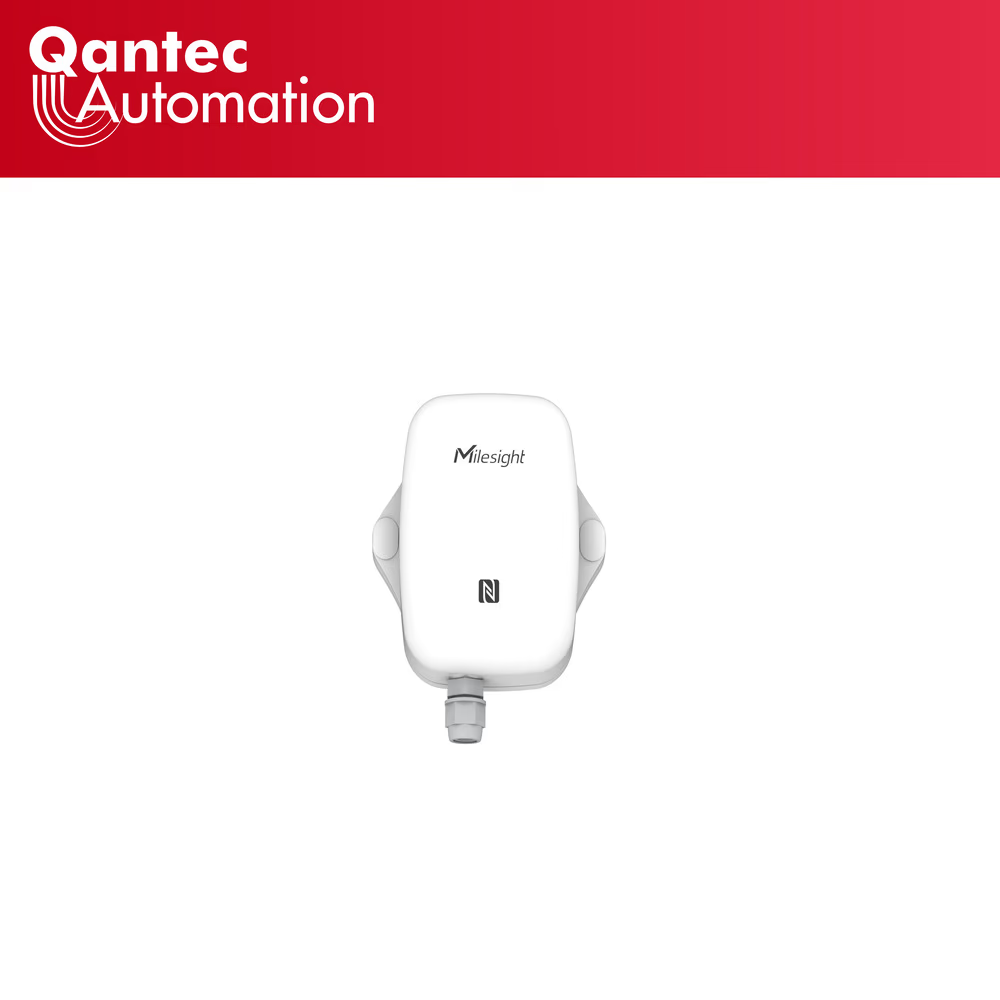
Counts dry-contact pulses from utility meters and equipment, reporting over LoRaWAN.
AUD $88.00 – AUD $93.50 inc. GST
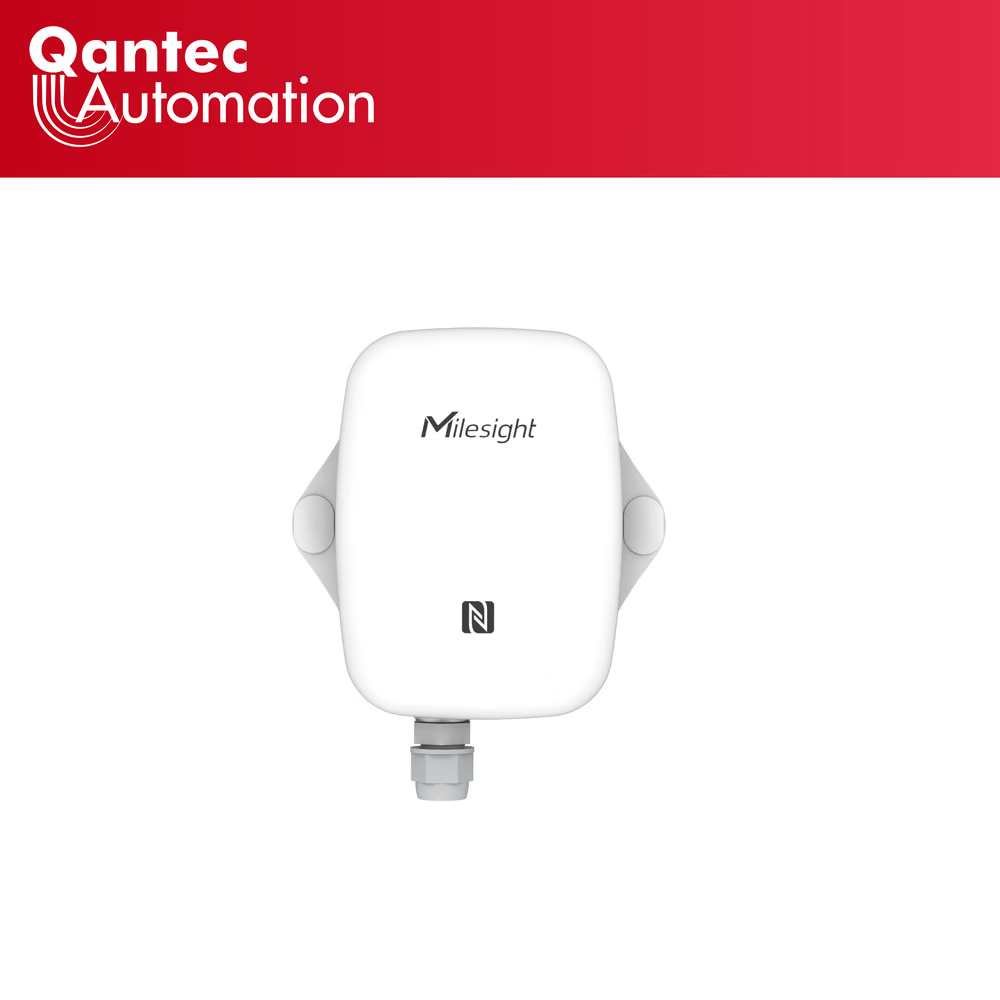
Enhanced Security and Monitoring with Advanced Magnetic Switch Sensor The EM300-MCS is a top-tier magnetic switch…
AUD $104.50 inc. GST
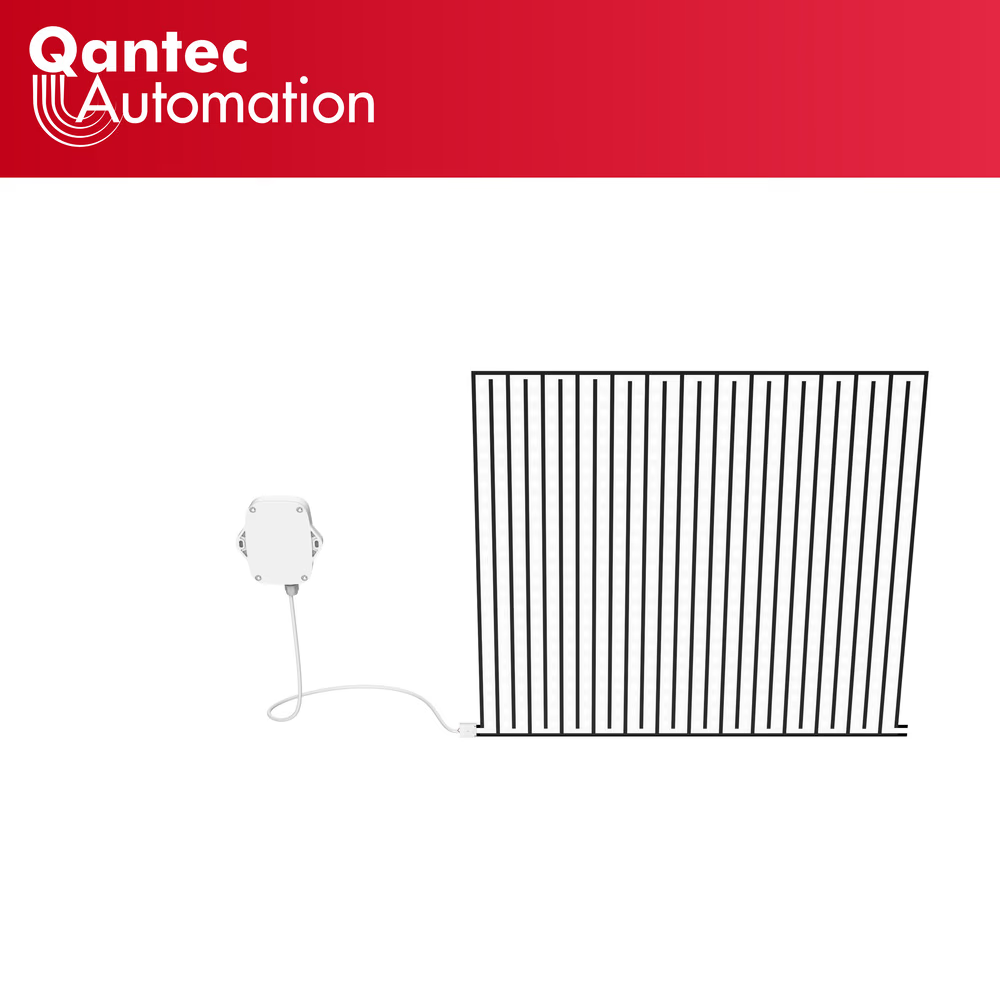
Transforming Leak Detection: Advanced Sensing for Diverse Applications The EM300-MLD leak detection sensor, equipped…
AUD $139.70 inc. GST
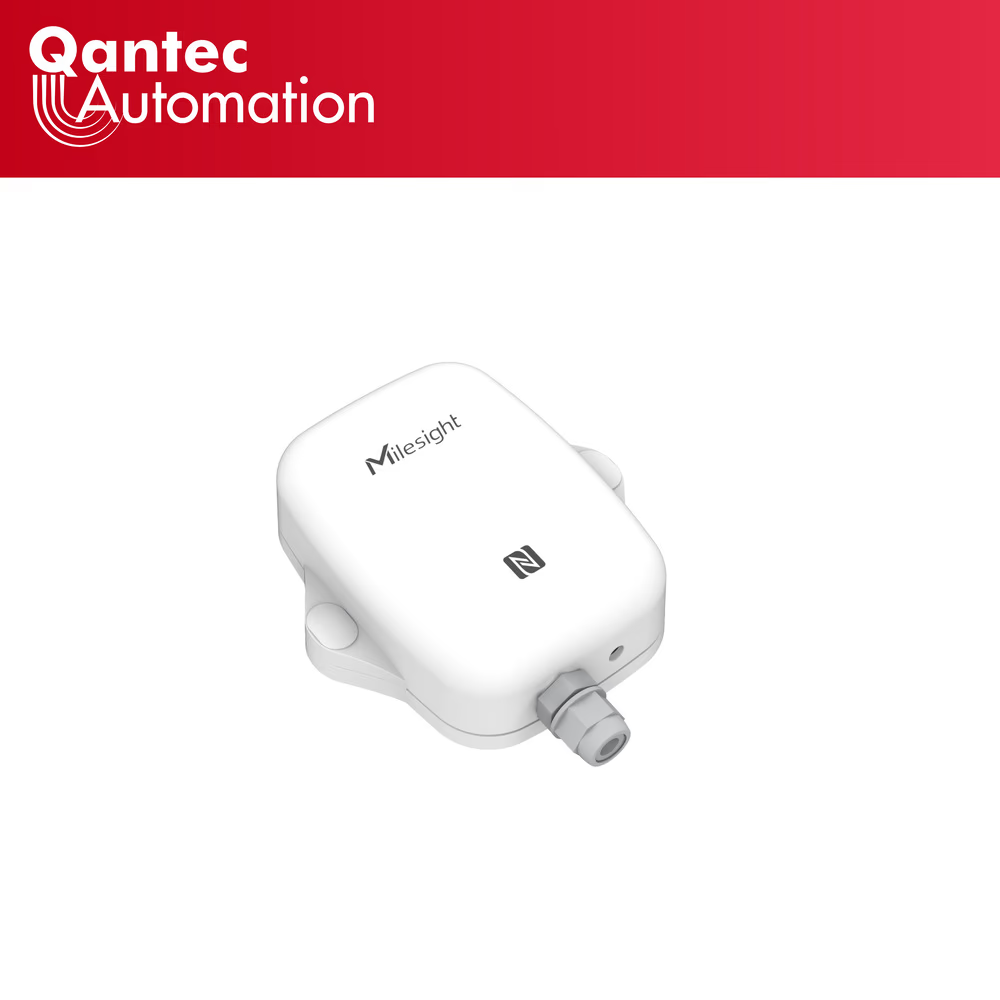
High-Efficiency Leak Detection with Integrated Temperature and Humidity Monitoring for Complete Asset Protection The…
AUD $97.90 inc. GST
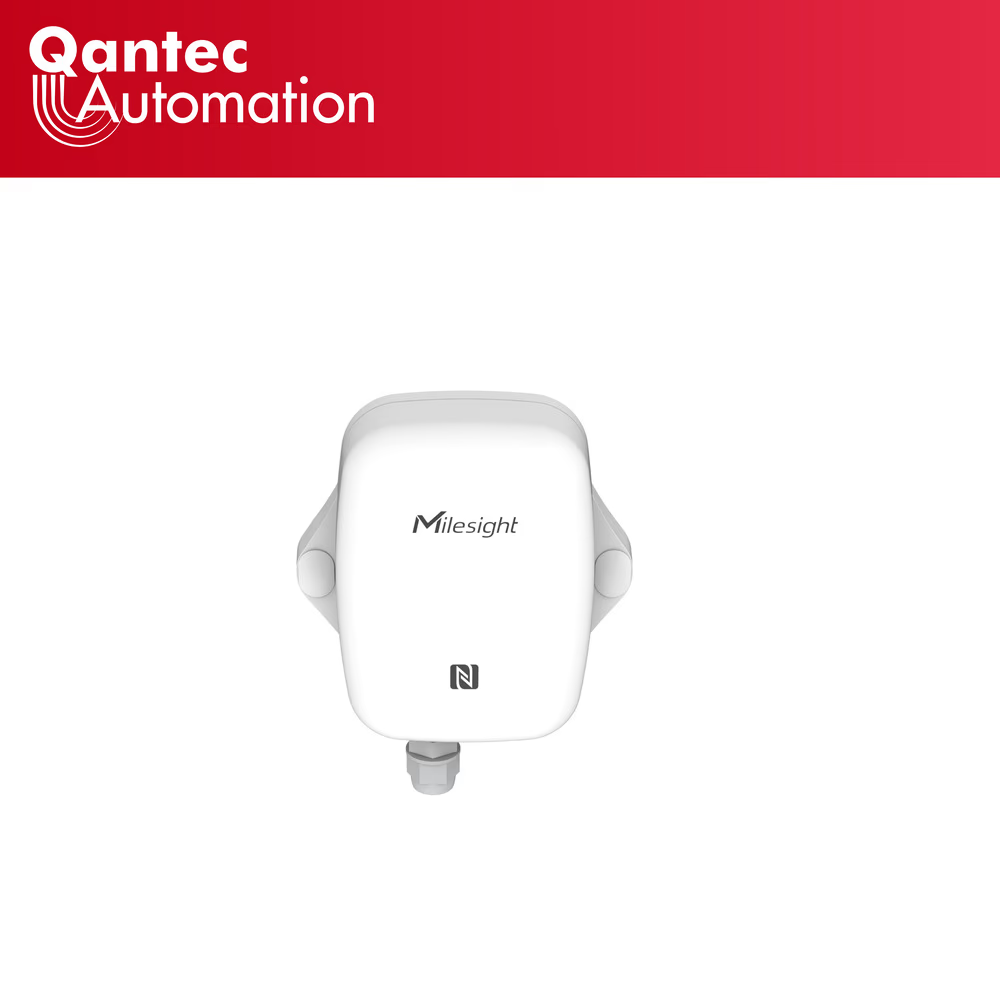
High-Efficiency Leak Detection with Integrated Temperature and Humidity Monitoring for Complete Asset Protection The…
AUD $127.60 inc. GST
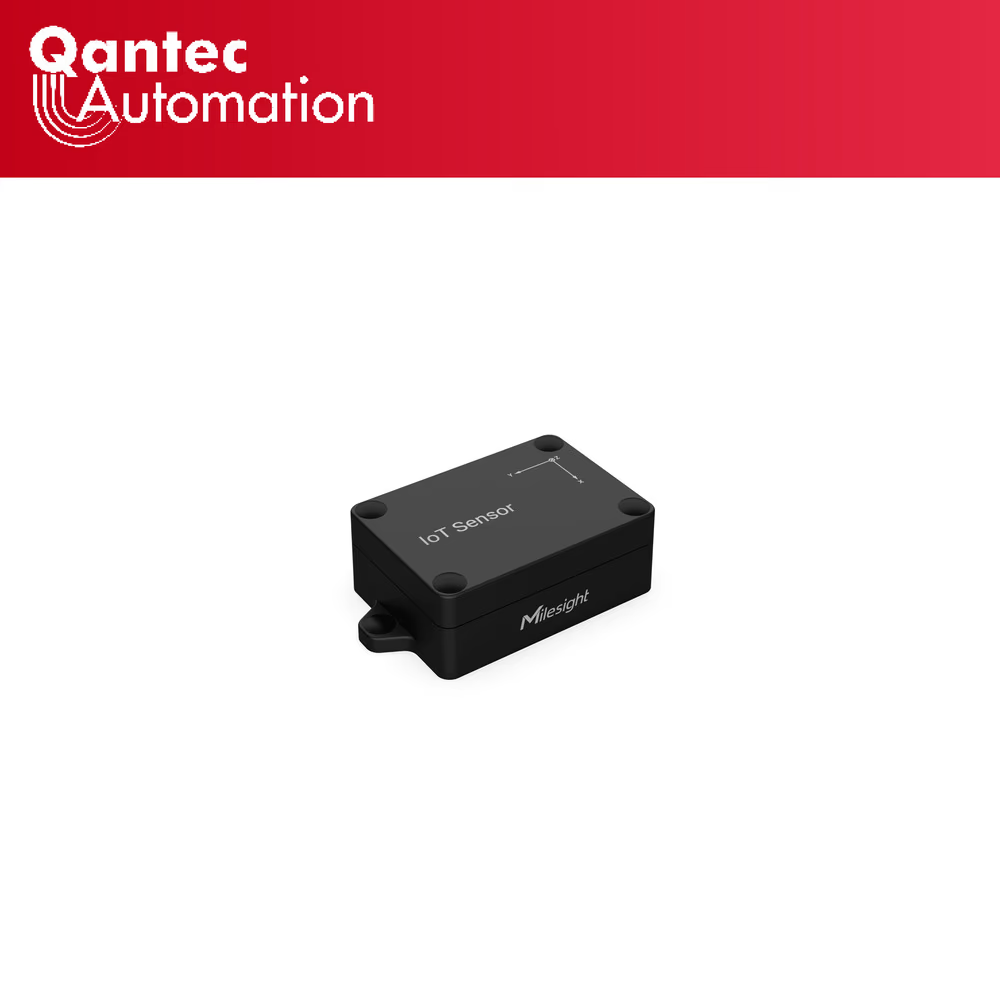
Introducing the EM310-TILT: Streamlined Precision in Angle Measurement and Asset Movement Detection The EM310-TILT is…
AUD $110.00 inc. GST
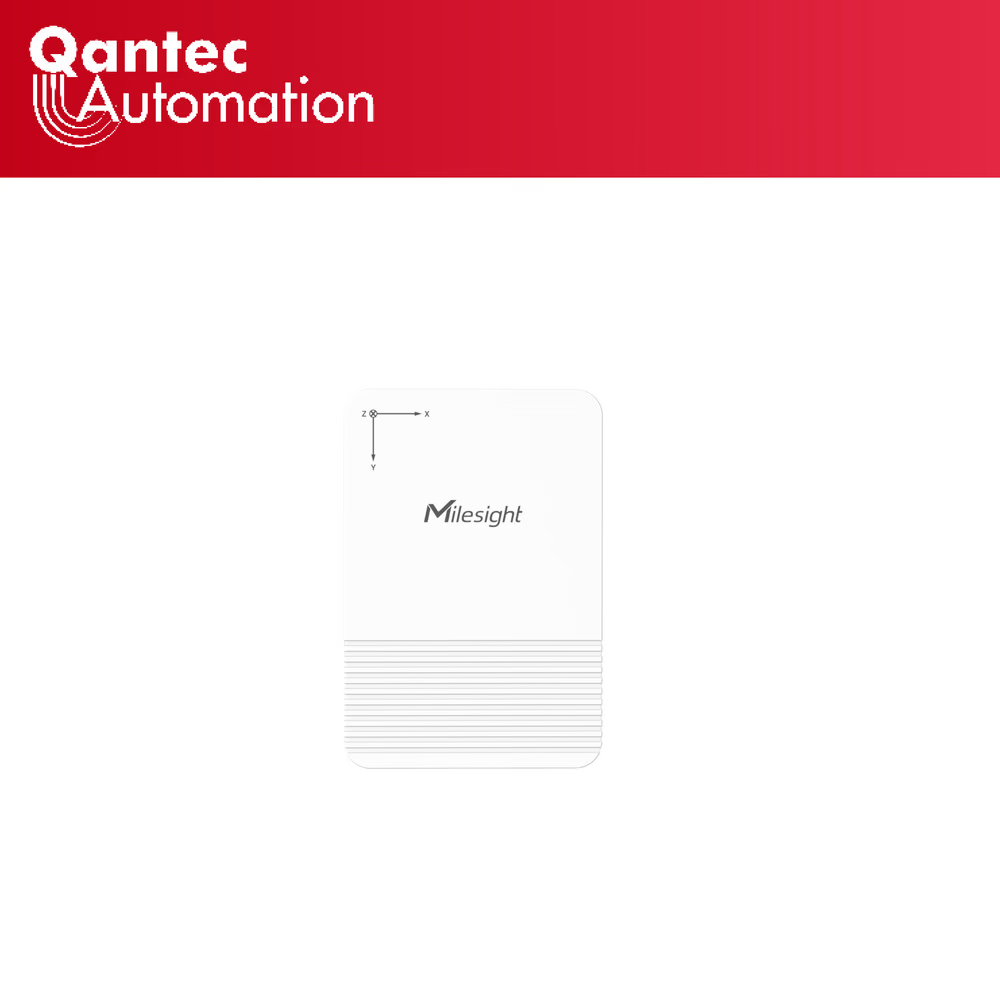
EM320-TILT: Precision Tilt Sensor for Reliable Asset Tracking and Monitoring The EM320-TILT is a state-of-the-art…
AUD $107.80 inc. GST
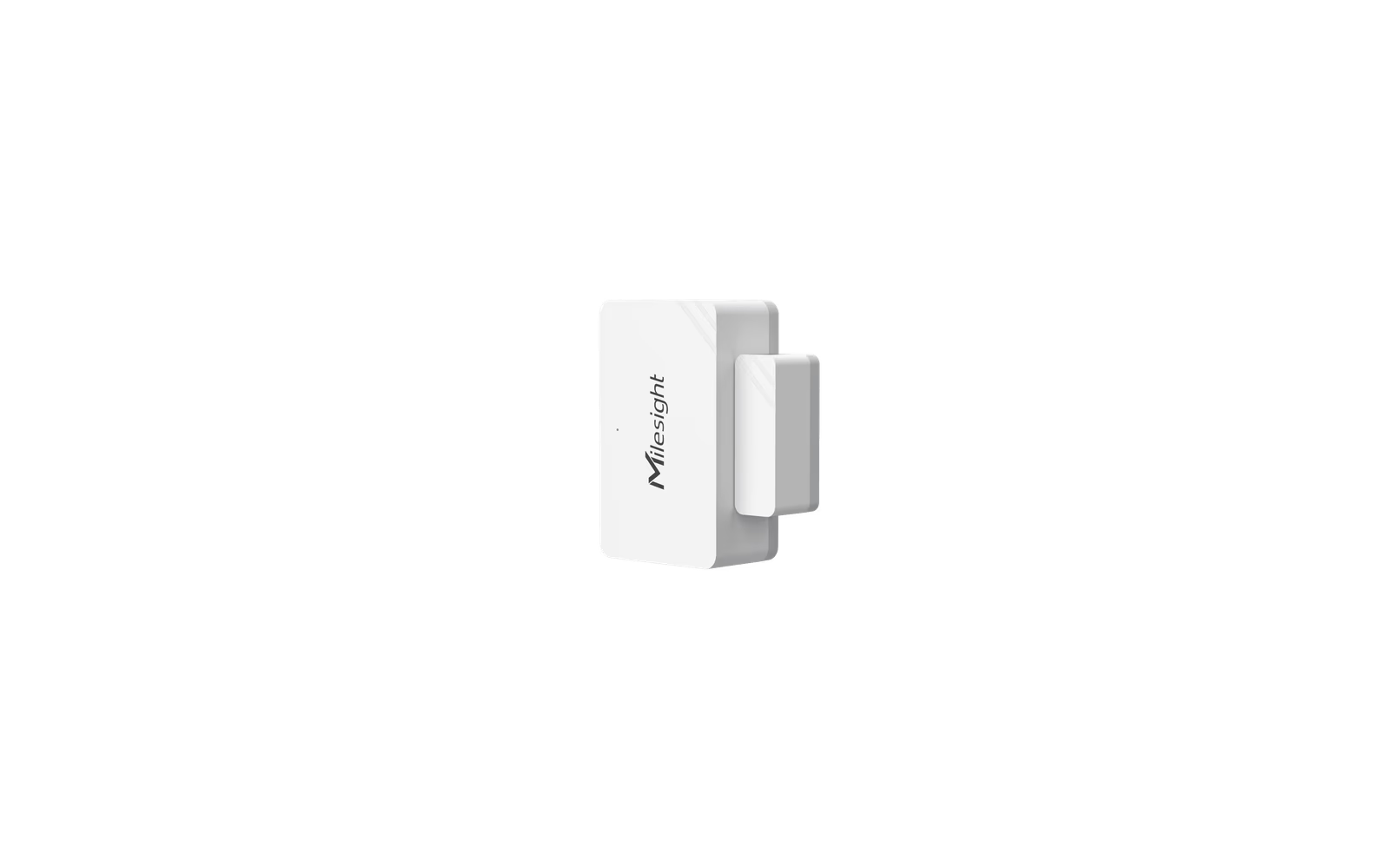
The Milesight WS301 Magnetic Contact Switch is your go-to for enhancing the safety, security, and ease of managing…
AUD $68.20 inc. GST
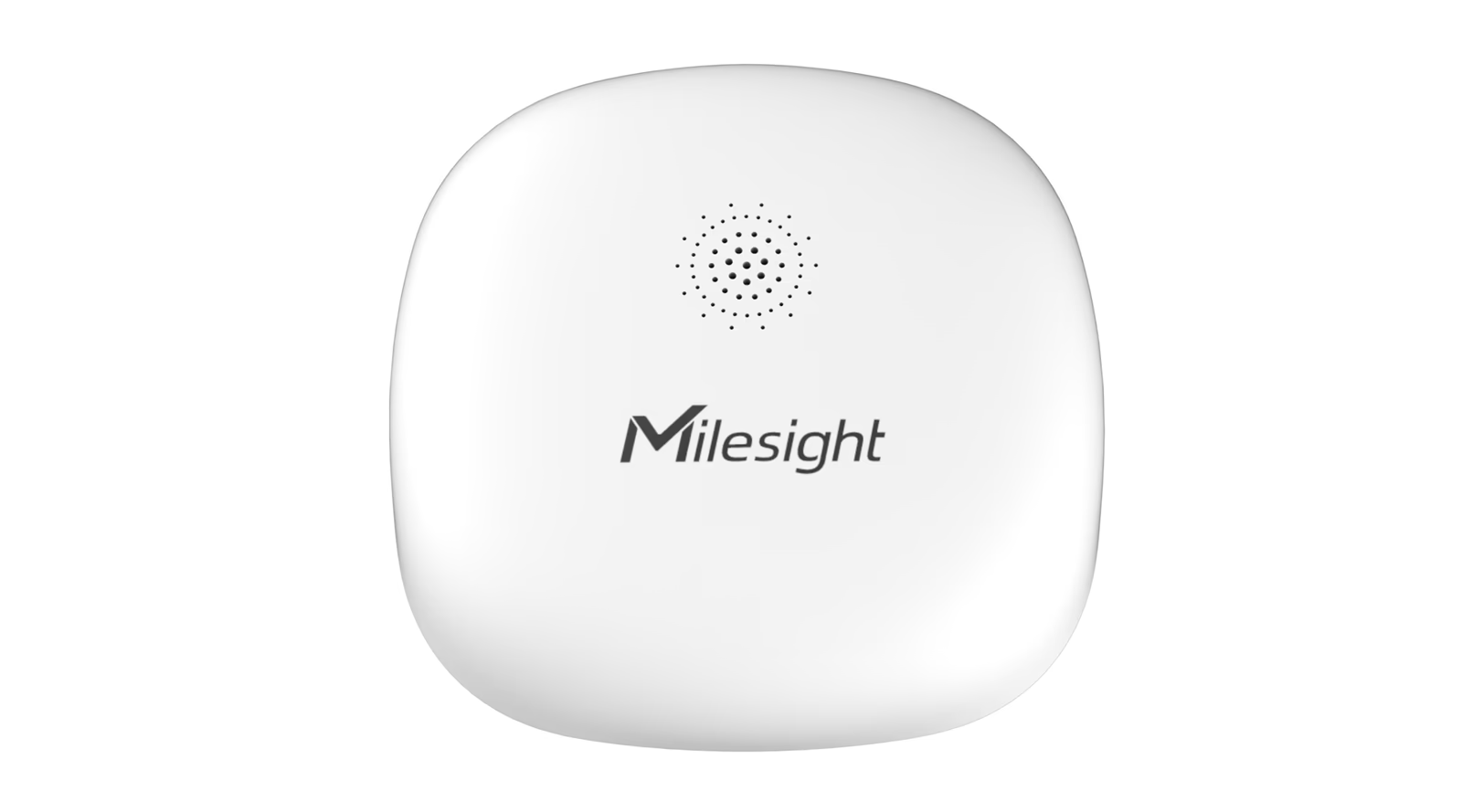
Introducing the WS303: A Compact Yet Mighty Water Leak Detection Sensor Discover the WS303, a diminutive water leak…
AUD $85.80 inc. GST